Public Books

THE FERRANTE PARADOX

MERVE EMRE

December 15, 2016 — Reading Frantumaglia, the new collection of letters, interviews, and occasional prose from Elena Ferrante, I was struck by how often the author opened her correspondence with an apology. “I apologize again for the trouble I cause you,” she writes to her publisher Sandra Ozzola of her unwillingness to appear in person to accept a prestigious literary prize. “I’m sincerely afraid that I don’t know how to contribute to your project … I apologize in advance,” she writes to Mario Martone, the director who wants to adapt her novella Troubling Love into a film, before providing him with 15 pages of brilliant, exacting notes on the script he has sent her. “I apologize in advance for the confusing or contradictory passages you may encounter,” she writes to critic and magazine editor Goffredo Fofi in a letter she ultimately decides not to send. The refrain clangs across all three hundred pages of the book: “I apologize.” “I am sorry,” “I am sorry,” “I am sorry.”

An apology is not a neutral act, especially not an apology that is issued publicly, as Ferrante’s apologies now are. An apology performs an act of deference, yet it need not be sincere. Often, in fact, it isn’t. “I am sorry” can serve as a strategic front, allowing the speaker to present a remorseful or self-vilifying attitude while continuing to think or do whatever she pleases. For Ferrante, apologizing is a tactic for preserving her innocence, a self-protective stance she has assumed since childhood, albeit with certain reservations. “Innocence—I began to convince myself—is never to get into the situation of arousing malicious reactions in others,” she writes. “Difficult but possible. So I taught myself to be silent, I apologized for everything, I reined in my tongue, I was polite and compliant. Yet secretly I was bad.”

Delivered in hindsight, the implicit message here is that preserving one’s innocence through unfelt apologies is a childish strategy, both politically ineffectual and self-deceptive. But Frantumaglia suggests otherwise. Whatever else it may be—a glimpse into the drawers of her writing desk, her publisher’s attempt to stoke or satisfy the curiosity of her readers—it is a book that, apology by apology, builds the case for Ferrante’s writerly innocence: not just her modest withdrawal from the “media circus and its demands,” but her complete exemption from the material and ideological operations of the literary field. “I consider the text a self-sufficient body, which has in itself, in its makeup, all the questions and all the answers. And then real books are written only to be read,” Ferrante writes. Frantumaglia is full of such statements of shallow profundity. Reading “once … was a purely private fact.” “Every reader gets from the book he is reading nothing else but his book.” We all “read books by no one.”

It is not clear to me that this case needed to be made. If Claudio Gatti’s claims about the Ferrante pseudonym revealed anything, it was not her true identity—that has been neither confirmed nor denied, and thus remains unresolved—but the degree to which critics, with nothing short of reverence, had already accepted her insistence on literature’s purity. She had a knack for turning self-proclaimed Marxists and feminists hopelessly middlebrow; for seducing even our most advanced critics into forgetting what they very well knew: that novels do not spring fully formed from the minds of geniuses; that the use of a pseudonym does not subvert a literary marketplace in which books are bought and sold with authors’ names emblazoned on their covers, their spines, on the top of every other page. These were children’s dreams, which perhaps explains why the anger of her defenders so often resembled the anger of children who, peering over the railing on Christmas Eve, were shocked to discover that there was no Santa Claus, only a tired mother pressing her scissors to the ribbons that wrapped their presents.

How did Ferrante manage to undo so many without arousing any malicious reactions? How did she remake the sensibilities of readers trained to sniff out politically suspect ideologies? Frantumaglia is, above all, an astonishing tutorial in unlearning how to read: how to abandon the language of critique that many have cultivated through formal schooling, in the hopes that such abandonment might bring us closer to the state of innocence that Ferrante has claimed for herself and her work. She draws inspiration from Walter Benjamin, who, in the beginning of Berlin Childhood around 1900, writes about learning to get lost in the city of his childhood, its roads and rivers furrowed into his memory. “Not to find one’s way around a city does not mean much. But to lose one’s way, as one loses one’s way in a forest, requires some schooling,” Benjamin writes.1 The same holds true for reading, insofar as unlearning how to read also requires some schooling, or rather, some unschooling. “The ‘right reading’ is an invention of academics and critics,” Ferrante claims. “The books we’ve truly read are phantoms conjured up by reading with no rules.”

<i>Naples, 2007</i>. Photograph by David Evers / Flickr

Naples, 2007. Photograph by David Evers / Flickr

For Ferrante, the best kind of reading is childish, untaught, enchanting. It summons up our “strong, slightly vulgar passions” and unearths a “fund of pleasure” that too many have “repressed in the name of Literature”—the cultural category produced by a disenchanted adulthood of criticism and theory. But a “real book,” a book we have “truly read,” is utterly absorbing, a wormhole to some pre-ideological moment before academic theorists, punishing and cold, unmasked reading and writing for what it was: a densely mediated activity, a marker of class privilege, a field of production in which many kinds of exclusions—by race, gender, sexuality, ethnicity, nationality—are erased under the blinding and numinous sign of Art. It is tempting to throw off the burden of political and historical consciousness in the face of enchantment. The magician waves his wand, taps his hat, and we realize, almost as an afterthought, that we do not want to know where the rabbit was hiding.

It is also tempting to believe that writing is “not a job”—another refrain of Ferrante’s throughout Frantumaglia; tempting to believe that a real book is simply an imprint of the author’s consciousness. It is an incantation that guards against the social, economic, or political circumstances of authorial production. This is the fantastical meaning behind frantumaglia, a word that Ferrante says she borrows from her mother’s Neapolitan dialect. Frantumaglia literally means “a jumble of fragments,” but the word wields a fabulous and disorienting performative power. Speaking it makes her mother dizzy. It sets her singing under her breath and drives her out of the house, the stove still on, the sauce burning. It makes her weep. “It’s the right word for what I’m convinced I saw as a child—or, anyway, during that time invented by adults that we call childhood—shortly before language entered me and instilled speech: a bright-colored explosion of sounds, thousands and thousands of butterflies with sonorous wings,” Ferrante writes. What we are offered in Frantumaglia, then, is something that predates not just literature, but language; a return to a state of pure sensory impression that could be called “childhood,” were “childhood” not already a compromised notion.

To return us to our childhoods, Ferrante speaks like a child. Her genre of choice is the domestic epic, her heroine the weaving woman: Ariadne, Dido, but above all others, Ferrante’s mother, described as a dressmaker in Naples, whose work Ferrante discusses at length in an interview titled “La Frantumaglia.” It unfolds from the perspective of Ferrante as a child, standing beside her mother at a fabric store, her head just clearing her mother’s waist. She waits and watches as her mother chooses the perfect fabric with which to “weave her spell.” Her mother’s dressmaking was “a spell I was deeply familiar with,” Ferrante writes, “but it enchanted me anyway, always.” Recreating this enchantment for her readers requires a subtle act of narrative erasure (like that of My Brilliant Friend, and unlike Proust, to whom she is so often compared): a refusal to impose any reflexive distance between the perspective of the adult who tells the story and the child she once was. It is as if the adult, and her artful shaping of a memory, never existed.

Except, of course, the adult narrator does exist and the spell her mother casts is nothing if not artfully described:


It was the sewing that cast a spell, much more than cutting. The mobile skill of that hand put together the pieces of material, made the seams invisible, the pieces of fabric regained a soft continuity, a new compactness, became a dress, the shape of a female body, skin clinging to skin, an organism that lay in her lap and sometimes slid down to her feet, which were in motion like her hands, ready to go to the pedal of the sewing machine. It was a back and forth that seemed like a dance to me, the hand moved the needle, the mouth bit the thread, the chest often rotated on the chair, turned to the machine to sew, the feet, wide, with a powerful structure, rested on the pedal and started the movement of the machine’s needle …


That her description is an allegory for writing fiction is obvious; Ferrante tells us as much when she reveals that the Neapolitan phrase “to cut the cloth on” is slang for telling stories, and that the women who come to try on her mother’s dresses speak of love, betrayal, heartbreak, and revenge with such passion that the fabric trembles under the force of their words. Yet it is also an allegory for the act of anonymous creation; an allegory expertly threaded through the movements of the sentences. It is the “mobile skill of the hand”—not the hand itself, not the woman to whom the hand belongs—that performs all the work and erases all traces of the work’s artfulness. And it is the dress that escapes the agile hand of its maker, taking on a life of its own as a separate “organism,” a compact and continuous shape. All the while its maker remains in fragments: a hand, a mouth, a chest, two wide and powerful feet. The woman to whom they all belong remains veiled by the beauty of the fabrics she has woven together.

<i>Mannequins</i>. Photograph by Karyn Christner / Flickr

Mannequins. Photograph by Karyn Christner / Flickr

The problem with allegory is that it can get heavy-handed. Nowhere is this more apparent than in Ferrante’s children’s book, The Beach at Night, which I have read aloud two or three times to my son before putting him to bed in the evenings. It tells the story of a pale, dark-haired, self-pitying doll who is abandoned on the shore at sunset and discovered at night by a Mean Beach Attendant, a man with a dark mustache and coarse hands. From between his lips he pulls out a thin golden hook, forces it down the doll’s throat, and rips from her a secret that she has guarded with great care: her name. My son did not appreciate the startlingly allegorical nature of the scene—to be fair, he’s only nine months old—and I found it cheap, gimmicky.

What The Beach at Night reveals is how impossible it is to ignore the biographical in reading Ferrante when so much of her prose turns on her allegories of anonymity, whether in the form of a dress made by no one or a doll who will not speak her name. It is precisely her refusal of the biographical, and her subsequent representation of that refusal, that has lodged the biographical ever deeper into the heart of what she writes. This is a paradox—or parlor trick, depending on one’s perspective—that critics have universally failed to perceive, resulting in a basic misunderstanding of what kinds of claims the biographical allows one to make. For instance, it makes no logical sense to argue, as Alexander Chee does in his review of Frantumaglia, that there is no value in knowing Ferrante’s identity, while also asserting that, if Ferrante is translator Anita Raja, whose ancestors are Polish and Jewish and not among the Neapolitan poor, then Frantumaglia is “a metafiction, her most experimental text yet, a massive prank on criticism and the media.”2Incoherent claims like this have proliferated in Gatti’s wake.

Why were we so invested in Ferrante’s anonymity anyway? After all, we never had it, even when we thought we did; we were always reading biographically, because that’s simply how we read novels when author’s names are appended to them. Setting aside the egregious ethical violations in outing her, the important question for literary criticism is not why would anyone want to know who she is, but why not know? What harm does it to do us? Is her literature so fragile that it can be injured by knowing a name? I would like to believe that the answer is no.

Los Angeles Times

The 10 most important books of 2016

For those who like fiction, the idea of crafting a character who is the stand-in for the novelist is more interesting than poking into a publisher’s financial records. “Frantumaglia” is the real accomplishment.

The 10 most important books of 2016

By Carolyn Kellogg

Books are slow food. It generally takes two years, two hardworking years, to cook up a book from idea to publication. Some writers can go faster — those who publish a book a year (or more) are working at top speed — while others write much more slowly, ruminating and reworking and false-starting for a decade or more. By the time we readers get them, books are self-contained objects, narratives that have evolved outside of the relentless news cycle and Twitter chatter. More than any other medium, books give us deep, rich stories that stand apart from the hubbub.

Except sometimes, that years-long process winds up being right in the center of the conversation. Which brings us to these, the 10 most important books of 2016. No matter when they started or how long they took, they touched on something that was essential this year, and will be essential when we look back at it from 2017 and beyond.

“Frantumaglia” by Elena Ferrante

Ferrante, the Italian author of the internationally bestselling Neapolitan novels, is a phantom, a pseudonym. “Frantumaglia” is an autobiographical assemblage of writings, sharing some of her history (possibly fabricated) and explaining that she wants to remain unknown because of the burdens put on female writers. Weeks before the book’s American release, a European journalist claimed to have discovered Ferrante’s true identity, raising questions of who needs to know what about whom. For those who like fiction, the idea of crafting a character who is the stand-in for the novelist is more interesting than poking into a publisher’s financial records. “Frantumaglia” is the real accomplishment.

Jezebel

The Best Things We Read in 2016 That You Still Can Too

I don’t know about you, but the only time I ever get a consistent amount of reading done is during vacation, when I haven’t spent the entire day scanning webpage after webpage.

As such, here’s some highlights from the year in words that was 2016 that you can enjoy during your holiday downtime, or pass on to others who also need something to distract themselves while watching chestnuts roast—I hear that’s called “gifting”?

The Neapolitan Novels, Elena Ferrante: You’re probably shocked to see a white feminist writer recommending an author as obscure and unheard of as Ferrante on highly trafficked woman’s site, but here I am, a goddamn unicorn. After years of knowing that I SHOULD read Ferrante, I finally DID read Ferrante and guess what? The Neapolitan Novels are very good? I feel like we’re on the crest of a Ferrante backlash, so I want to get this in before it fully arrives: She truly does capture the complexity of female friendships and quiet violence of being female better than almost any writer I’ve read before. (I’ve followed the Neapolitan Novels up with Clover’s recommendation, The Mothers by Brit Bennett, and they complement each other very nicely.)

World Literature Today

World Literature Today’s 75 Notable Translations of 2016

75 Notable Translations of 2016

In our fifth annual list of “75 Notable Translations,” we again offer an admittedly incomplete collection of the year’s English translations. And again, we invite you to share your favorites from the year as well as those you’re most eagerly anticipating in 2017 by using the hashtag #2017Reads on Twitter and Facebook.

Two notable firsts: Boubacar Boris Diop’s Doomi Golo: The Hidden Notebooks became the first novel translated from Wolof to English and Phoneme Media published the first English translation of a Burundian novel, Rugero Roland’s Baho!, translated by Chris Schaefer. And a new nonprofit, independent press that will include translated literature among its publications entered the scene. Transit Books will release four titles in 2017.

The conversation about women in translation continued. In September, Alison Anderson and David Shook participated in an interview on WLT’s Translation Tuesday blog series, discussing with Melissa Weiss the status of women authors in translation. In November, WLT published an issue devoted exclusively to women writers, cover to cover, including pieces in translation from Arabic, Chinese, Danish, Hebrew, Hungarian, Icelandic, Macedonian, Norwegian, and Spanish. So if you’re looking for great translations by women writers, perhaps to join Biblio’s #Women in Translation Month, WLT’s November issue and the list below are two great starting points.

We look forward to continuing to serve as your passport to great global reading in 2017.

Elena Ferrante, Frantumaglia, trans. Ann Goldstein (Europa Editions)

The Australian

Holiday reading: from Coetzee to Keneally, Winton and Ferrante

Summer is the perfect time to catch up on the books you’ve missed.

The challenge at this time of year is, well, entertaining the in-laws (or the spouses, to be fair to in-laws). In this week’s Ragged Claws column, I mention Scorn: The Wittiest and Wickedest Insults in Human History. But let’s not go there unless we need to. First there is an even greater challenge, one I face each December: choosing books for this summer reading/Christmas gift guide.

It’s something I like doing but I do fret about forgetting books that should be remembered. As you read this, I’m at home waiting for an email that blasts “How could you leave out X?!” I also want to cover books that will appeal to different readers, not just myself. It can’t all be about horseracing, I understand.

So, as usual, the following is based on books I’ve read, reviews of ones I haven’t, prizes and sales, talking to friends and checking “books of the year” lists here and there. I’ve also peeked at our own best books wrap-up, the picks of local writers and critics, which we will run next week.

I want to start, however, with my two books of the year, a decision I found easier than usual. Both are international. My favourite novel was Imagine Me Gone by American writer Adam Haslett. It’s a beautiful, moving exploration of a fractured family shadowed by the father’s suicide. My favourite nonfiction book — and indeed my book of the year — was one Peter Carey brought to my attention: The Return: Fathers, Sons and the Land In Between, by London-based Libyan novelist Hisham Matar. It’s a complex, aching memoir of his decision to return home to try to learn, 20 years after the event, what happened to his father, who was an opponent of Muammar Gaddafi.

LITERARY STUDIES

There was a row two months ago when an Italian journalist published a piece revealing the “real” name of bestelling Neapolitan author Elena Ferrante. Well, whatever her name is, most of us think of her as Elena Ferrante, and I think will do so even more if we read Frantumaglia, a collection of her correspondence with publishers, readers and journalists. It’s an absorbing explanation of why this writer insists on anonymity, and also reveals a lot about the inspiration for and thinking behind her remarkable novels. Even more authors go about thinking in The Writers Room, in which novelist Charlotte Wood collects the interviews she has conducted with fellow authors. In Treasure Palaces: Great Writers Visit Great Museums, edited by Maggie Fergusson, there are museum and gallery tributes by authors such as Julian Barnes, Aminatta Forna, Margaret Drabble and Tim Winton. Literary Wonderlands, edited by Laura Miller, is a “journey through the greatest fictional worlds ever created”. Beautifully illustrated, it’s a critical consideration of works from The Odyssey and The Tempest to the works of authors such as Mark Twain, Franz Kafka, Ursula K. Le Guin, Margaret Atwood. David Foster Wallace, JK Rowling and Salman Rushdie. George Orwell is in Literary Wonderlands but the book I want to read about him is John ­Sutherland’s Orwell’s Nose: A Pathological ­Biography. Sutherland had the idea for this book after he lost his own sense of smell, permanently. Rereading Orwell, he was struck by his focus on smells. He started thinking of the “scent narratives” in Orwell’s books. Considering a passage in Nineteen Eighty-Four where Winston Smith, in a flat, smells the “sharp reek of sweat” of “some person not present at the moment”, Sutherland writes: “You need a nose a bloodhound would envy to track the perspiratory reek of someone who has been out of the house for hours.”

The Millions

A Year in Reading: Bich Minh Nguyen

This year a group of friends and I started a book club because we wanted to talk about Elena Ferrante’s Neapolitan Quartet. It so happened that we also love karaoke, so we became a karaoke book club: we talk about writing and desire and friendship and then we go and sing our hearts out. This pairing works beautifully and maybe it’s because we want to be in a moment, like Ferrante Fever. I’ve been thinking about how much immersion matters, how I’m reading for what books can make me feel, especially a particular collusion of sadness and rage, sparked by longing. This takes many forms: rawness, interiority, yelling, even silence. It has to do with characters working against histories and structures that often seem impossible to break.
Elena Ferrante’s Elena and Lila are trying to figure out their own selves, at times creative and wild, within harsh patriarchal and provincial structures.

The New York Times

‘Ferrante Fever’ Continues to Spread

Scroll.in

From Dante to Ferrante – the inevitable Italianisation of the world

Presented in Times New Roman font, in italics.

From Dante to Ferrante – the inevitable Italianisation of the world

Italian voters will go to the polls on Sunday in what was Italy’s most comprehensive constitutional referendum ever. Who cares, you might say. And yet I warn you, watch out for what happens in Italy, it often ends up affecting the rest of the world.

I write this in italicised type because this is what this piece is all about, really. The Italianisation of the world. Sure, now that a Punjabi-American, Nikki Haley, the youngest governor in the United States, has become the first woman appointee in the Donald Trump administration, now that you have your Satya Nadella as chief executive officer of Microsoft, and your Sundar Pichai as CEO of Google, plus a few key Indians or Indian-Americans in pivotal spots, you may start to think India is actually making an impact in the world.

We, Italians, have been there before. Just think of the Italianisation of the world. Make no mistake, the Roman empire was there before all other Western empires – all copy cats of our Marc Aurelios, our Caesars. Where did you think the word Kaiser came from?

And let’s look at literature: Dante Alighieri came way before Shakespeare. By the way, it’s been 90 years since some Italian intellectuals have been trying to tell the world that the reason his sonnets and plays are so often set in Italy and reveal such deep knowledge of our country is because William Shakespeare is a pseudonym for Guglielmo Scrollalanza. He was Italian. Look it up.

I won’t even mention the obvious contribution to the Renaissance. Too easy. Let’s slide straight to the 1800s, after reminding you that Christopher Columbus was indeed from Genova and that words like ciao and ghetto are Venetian, just like Marco Polo, Giangiacomo Casanova and Romeo Montecchi (who died for Juliet). Global icons of exploration, fornication and hopeless love.

Mazzini and Savarkar

Italy is a political laboratory of the future. Giuseppe Mazzini, the main ideologue of the movement leading to the unification of Italy, the Risorgimento, has changed the world in many ways, although this is gravely under reported. His ideas of a unified people guided by a sort of spirituality, although not necessarily a religion, are explained in detail in the upcoming Age of Anger by Pankaj Mishra (Juggernaut 2017). Mazzini had a deep and wide impact on Hindu nationalist Vinayak Damodar Savarkar. Yes, Prime Minister Narendra Modi’s favourite inspiration. So forget about Sonia Gandhi, the Italianisation of India started way before her and continues through the Bharatiya Janata Party. Asian, African and Arab nationalisms altogether, Mishra argues, have been deeply influenced by the Italian Mazzini. Alas, as he explains with detailed examples, the adventurous and rambunctious Fascist bard Gabriele D’Annunzio has also inspired contemporary terrorists everywhere.

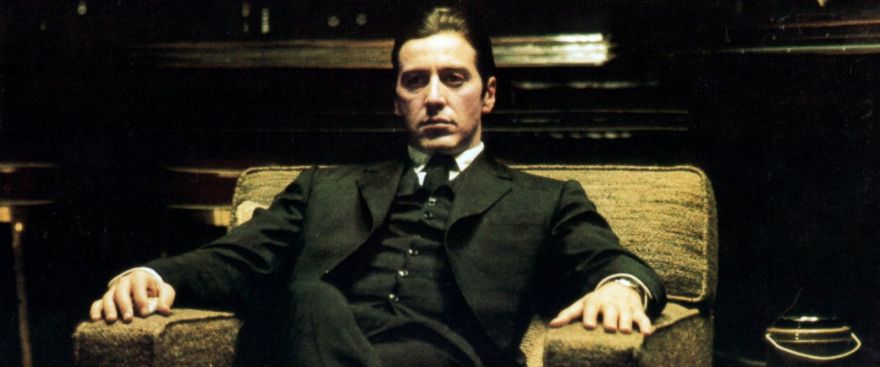
Thanks to our murderous creativity and later to Italian-American Francis Ford Coppola (and Italian-Americans Al Pacino and Robert De Niro), mafia has been the archetype of international organised crime since it was born in Sicily, with the unification of Italy, until today.

Al Pacino in The Godfather.

Let’s not even mention pasta and Neapolitan pizza and their global penetration into the stomachs of the world. French cuisine, you say? Quel shock! It comes from Italy as well. Although French food historians have been busy trying to debunk this fact, Catherine De’ Medici, sent to marry Henri II at the court of Francis I, imposed as a pre-condition bringing to Paris her eight chefs, who taught those half-baked potato-eaters what real food is. Anyway, Leonardo Da Vinci had already been to that court to freshen up the interior decoration. Just saying.

Politics and media

Flash forward to the 20th century. Who do you think Hitler was copying while setting up his racist, anti-semitic, bloody Third Reich? But our very own Benito Mussolini, of course. Fascism is back in vogue in the world. Who invented it? Some Italians imitating ancient Romans.

Quiz: who do you think came first, Marine Le Pen or the Lega Nord? And, hey, we’ve had an anti-European Union clown (I don’t mean that as an insult, that is Beppe Grillo’s lucrative profession) gathering 20% of the vote for the 5 Star Movement way before Brexit had its ill-tempered Nigel Farage. But Machiavelli is also one of our Made in Italy exports, after all.

Scroll down to the 21st century. Who’s had a dubious chauvinist billionaire with a loud mouth in power first? Italy or the US? Bunga-Bunga Berlusconi officially denied similarities with Donald Trump saying, “Hey, I’m not a conservative.” And he is technically right. But it is very difficult not to see the comparison.

Before Donald Trump, there was Italy's Bunga-Bunga Silvio Berlusconi. (Photo: Reuters)
Before Donald Trump, there was Italy’s Bunga-Bunga Silvio Berlusconi. (Photo: Reuters)

One advice I could give America and the world, having lived in Berlusconi’s Italy, is to not follow the pied piper, don’t let him entertain you, the message within the laughter is deadly and not in your interest.

Media should be careful and self-restrained. But, of course, it is impossible to resist. The system is set up so as to make the American Berlusconi impossible not to talk about.

And where did this system, capitalism, start anyway? Well, in the pioneering banking era of the De’ Medici family in Florence. Yes, in Italy.

But speaking of capitalism and media, there you have another proof of my theory: Italian media has always been embarrassingly biased. When I signed my contract with the newspaper la Repubblica decades ago, it spelled out that the editorial line was founded on the ideals of the democratic left. No secret there. In Italy, you read a newspaper, website or watch a specific TV channel only to reconfirm your opinions, not to get the facts. Facts are distorted by opinion anyway, so let’s just stick to your bias. Now that not only Fox, but also CNN, MSNBC, the Washington Post and the New York Times have largely given up on the idea of fairness in reporting, I deduce the Italianisation of media has reached globally. Communists read “il manifesto,” if you’re nostalgic for the good ol’ days of Benito, you read “Libero”.

Arnab Goswami, you say? We’ve had Giuliano Ferrara (a former Berlusconi minister at one point) since the 1980s in Italian TV. Ferrara built a political and media empire for himself out of being loud and overpowering guests with his own slant.

Okay, my theory is not that we’re the best influence, but that Italy is an influence nonetheless.

Yes, of course, I wish that everyone, as it is beginning to happen, just read our poet-philosopher Giacomo Leopardi, or rediscovered the aesthetic theories of Benedetto Croce, or read up on Antonio Gramsci or Pier Paolo Pasolini, and brought up the Venetian justice system or Venetian architect Palladio and painter Titian, when thinking of Italy. Or that people remembered our recently departed Umberto Eco, our immortal Italo Calvino along with the popular Elena Ferrante.

But this is what’s on the menu, in this Italian restaurant. The bad and the good. Written, of course, in a Times New Roman font.

Johanna Juni

My Neapolitan Novel Moment

img_0314

In Elena Ferrante’s second Neapolitan novel “The Story of a New Name,” Torregaveta makes an appearance when one of the characters tells her husband she wants to go to the beach with her small son, and her husband, who no longer loves her, tells her to take a bus to Torregaveta.

The bus ride starts from a Naples train station one stop removed from the main train station; the dead end last stop with rows of worn graffitied regional trains parked side by side almost in the dark. The seats in these regional trains are metal and miniature like cable car seats making them hood on the outside but dainty and refined on the inside. Once you leave Naples, the Naples-Torregaveta bus ride is almost entirely along the coast, like the Almalfi Coast route but less winding and less steep. This bus ride requires almost no attention from the bus driver, who frequently had his eyes off the road.

While I was stranded there for 20 minutes, I saw three different wedding groups having their photos taken and as the novel relates, it was not a Capri crowd. From a distance, I saw a little girl in a white dress constantly fluffing a bride’s gown. It was the best image I took in Naples, during my last few hours there. At the time, the only reference I had was to the book cover of the first novel, which I had not yet read, and so I had no idea the location would also signify something in the novel. What’s even more weird is that I had entertained the idea of being a mother with a child on this bus and wondered what it would be like.

NPR Books

Are you looking for a picture book to help your darling nieces and nephews drift to dreamland, like a lost doll swept to sea? This is not that book, if you would like them to, y’know, EVER SLEEP AGAIN. The Beach at Night is Elena Ferrante’s (yep, the very same) fable about a doll’s night alone on a beach after she is abandoned by her owner. You could be forgiven for thinking this slim volume, with its dreamy illustrations, is a children’s book, and I think it might be, but many American children will not have encountered these themes (or the word “s***” for that matter) in a picture book. (There is also a vaguely sexual overtone to the abuse that Celina, the doll, is put through by her tormentor, The Mean Beach Attendant of Sunset.) That said, for American adults who have devoured Ferrante’s Neapolitan quartet, it will be a pure and strange delight. It’s a wispy and weird little tale that feels familiar — another Ferrante mother and daughter pair working through the complexity, cruelty and beauty of their bond. (For ages 8 to 12)

— recommended by Barrie Hardymon, Weekend Edition staff

The Sidney Morning Herald

The Beach at Night review: Elena Ferrante’s biggest surprise – a children’s book

Kerryn Goldsworthy

A children’s book is probably the last thing anyone  expected from Elena Ferrante, but this unnerving little gem was first published in 2007 and so pre-dates her Neapolitan  quartet. It’s the tale of a doll that gets left on the beach, at the mercy of the Mean Beach Attendant and his rake and his fire, after being forgotten by the little girl who now has eyes only for her new kitten. Anyone who has suffered the pain of being cast aside in favour of a new love object will relate, and there’s also the powerful imagery of being abandoned to terrifying dark forces once the daylight fades. So I imagine it might give a sensitive or insecure child nightmares, despite its sweet and unexpectedly redemptive ending. Mara Cerri’s softly coloured and dreamlike illustrations are  not sentimental at all.

TV5MONDE

“Le nouveau nom” d’Elena Ferrante, meilleur livre de l’annéeLe roman &quot;Le nouveau nom&quot; de la mystérieuse auteure italienne Elena Ferrante est &quot;le meilleur livre de l&#039;année&quot; 2016, selon le classement établi par le magazine Lire

Le roman “Le nouveau nom” de la mystérieuse auteure italienne Elena Ferrante est “le meilleur livre de l’année” 2016, selon le classement établi par le magazine Lire et révélé jeudi soir.

“Aucune oeuvre ne nous aura plus séduit cette année que cette saga au long cours, née sous la plume d’une auteure anonyme”, a souligné la rédaction de Lire en annonçant son palmarès des 20 meilleurs livres de l’année.

Suite de “L’amie prodigieuse”, la grande série napolitaine imaginée par la romancière italienne, “Le nouveau nom” (Gallimard) poursuit l’histoire de Lila et Elena, adolescentes inséparables des faubourgs populaires de Naples qui feront le dur apprentissage de la vie, selon des routes qui vont bientôt diverger au fil de leurs passions contrariées.

Ce roman renoue “avec le souffle romanesque des romans du 19e siècle, sans esquiver les problématiques les plus modernes” comme l’émancipation féminine, a estimé Lire. “Elena Ferrante, l’écrivain, peut bien s’effacer, sa suite napolitaine restera comme un classique moderne, qu’on relira encore dans plusieurs années”.

Aux côtés d’Elena Ferrante, le palmarès 2016 de Lire réunit la fine fleur de l’année littéraire: Serge Joncour (meilleur livre français pour “Repose-toi sur moi”, Flammarion), le Britannique John le Carré (dans la catégorie Mémoires pour “Le tunnel aux pigeons”, Seuil), Négar Djavadi (meilleur 1er roman français pour “Désorientale”, Liana Levi), Jean-Baptiste del Amo (Révélation française pour “Règne animal”, Gallimard), Marie Darrieussecq (catégorie Art pour “Etre ici est une splendeur”, P.O.L.), Ivan Jablonka (catégorie Enquête pour “Laëtitia ou la fin des hommes”, Seuil), l’Américain Don Winslow (catégorie Polar pour “Cartel” Seuil)…

L’écrivain australien Richard Flanagan est, selon Lire, l’auteur du meilleur roman étranger pour “La route étroite vers le Nord lointain” (Actes Sud) et la Canadienne Emily St. John Mandel est la meilleure révélation étrangère pour “Station Eleven” (Rivages).

The Spectator

Rifling through Elena Ferrante’s writing desk

As a sop to the media, the reclusive author gives us Frantumaglia — a deafening Neapolitan jumble of stories, letters and stories within letters, guaranteed to keep us quiet

(Photo: Getty)

Frantumaglia isn’t strictly a book by Elena Ferrante. Frantumaglia isn’t strictly a book at all. It’s a celebration of the life of the novel and a manifesto for the death of the author, told in a collection of interviews, letters from journalists requesting interviews, letters within letters, stories within letters, and letters from Ferrante’s editor in which the idea of publishing all these letters, dating from 1991 to the present day, is initially proposed.

The whole caboodle is a dizzying ‘jumble of fragments’, ‘a miscellaneous crowd of things’, a mass of ‘contradictory sensations’ which ‘make a noise in your head’. Which is how Ferrante defines ‘frantumaglia’, a word lifted from Neopolitan dialect which will now, doubtless, find its place in the OED. Frantumaglia is what wakes you in the night; frantumaglia, says Ferrante, is the source of all suffering. It is also, she stresses, the origin of writing. It is from the chaos of frantumaglia that stories are born: ‘The stories that you tell, the words that you use and refine, the characters you try to give life to are merely tools with which you circle around the elusive, unnamed, shapeless thing that belongs to you alone.’

Everything in these pages is calculated to make a noise in your head. The layout, for example, is exasperating. We are given Ferrante’s replies to letters before being shown the letter to which she is replying; her detailed responses to interviewers’ questions are given before we are shown the questions themselves. One particularly brilliant letter, to a journalist called
Francesco Erbani, was, we are told only after we’ve read it, never sent.

Ferrante’s editor, Sandra Ozzola, describes the book as a story whose subject is ‘the 25-year history of an attempt to show that the function of the author is all in the writing’. It’s a story that admirers of the Neopolitan Quartet know already: Ferrante’s refusal to join in the media circus has created a media circus; her insistence on privacy has been treated as a crime.

This book is offered as a concession to Ferrante devotees, with the blurb inviting us into her ‘workshop’, where we are free to rifle the ‘drawers of her writing desk’. Which is of course exactly what the investigative journalist, Claudio Gatti, did recently, when he used Ferrante’s bank statements to uncover her real name. His justification was, he said, the ‘lies’ in Frantumaglia, which boil down to Ferrante’s description of her mother as a dressmaker when she apparently had some other job. Elena Ferrante’s nom-de-plume is at the heart of her art, and Gatti’s lumpen literalism, for which he expected a standing ovation, has made him an international pariah. So it is both strange and moving now to read, in the light of her unmasking, Ferrante’s devastating plea for invisibility.

Having perused her mail, I wonder how she has stayed sane. Fighting off the media is Ferrante’s life’s work. In letter after letter she explains, in a thousand different ways and with endless eloquence, why she restricts herself to a small number of email interviews. ‘My entire identity is the books that I write’; ‘I believe that books, once they are written, have no need of their authors’; ‘I wanted the books to assert themselves without my patronage.’ She writes in order to ‘free’ herself from her stories, not to become their ‘prisoner’.Frantumaglia could, without losing volume, be reduced to a series of aphorisms on the subject of authorship.

Meanwhile, the interviews Ferrante is gracious enough to grant focus exclusively on her desire to absent herself from the fanfare of book promotion. Asked the same question again and again, she replies with her usual clarity: ‘Is a book, from the media point of view, above all the name of the person who writes it?’ She has chosen ‘absence’, she repeats, and not ‘anonymity’; her books are not anonymous because there is a name on the cover. Giving yourself to a book, she says, is fantastically exposing — ‘it’s as if you had been rudely searched’ — and so the reader has already seen all of her.

Frantumaglia tells us a great deal about the business of being a writer in a philistine, celebrity-obsessed culture, but this is not where the force of the book lies. Ferrante also reveals something about readers which we are refusing to hear. It’s what Keats explained in a letter to his friend, Richard Woodhouse— the poet can be found in his poems and not in his person.

The Irish Times

Romantic notions: does fiction warp our thinking about love?

The complexities of love and marriage have sustained novelists from Jane Austen to Elena Ferrante. What do they tell us?

Gwyneth Paltrow and Toni Collette in the 1996 film adaptation of  Emma by Jane Austen

According to Anthony Trollope, “There is no happiness in love, except at the end of an English novel.” The marriage plot is considered one of the oldest narrative structures in literary history, originating with the troubadour poets and extending to contemporary novels and modern popular culture.

A line from François de La Rochefoucauld: “People would never fall in love if they hadn’t ever heard love talked about,” forms the epigraph of Jeffrey Eugenides’s The Marriage Plot. Similarly, Alain de Botton quotes the same epigraph from de La Rochefoucauld in a New York Times article, using “that brilliant observer of human foibles” to strengthen his point: our style of loving is, to a significant extent, determined by what the prevailing environment dictates.

The complexities of marriage have provided ample fodder for novelists from Jane Austen to Karl Ove Knausgaard. Here are some of them. (…)

My Brilliant Friend by Elena Ferrante

Elena Ferrante is one of Italy’s best-known contemporary novelists, who remains an enigma as she refuses the glare of publicity, preferring her fiction to represent her. In the first of her four Neapolitan novels, the heroine Elena Greco writes of Nino (her soon-to-be husband) that “he said things that I could never have thought, or at least said, with the same assurance, and he said them in strong, engaging Italian.”

A reader of these novels will be able to study the changing landscape of the heroine’s marriage, the cooling of her ardour with time as she develops her own confidence and career. Ferrante explores the dilemma of marital crisis. “What could I do to keep my life and my children together?” asks Elena, a quandary faced by many women in the throes of a marital breakdown.