The Stage

Casting announced for Elena Ferrante stage adaptation

by Georgia Snow

Niamh Cusack and Catherine McCormack are to lead the cast of My Brilliant Friend, the stage adaptation of Elena Ferrante’s Neapolitan novels.

Adapted for the stage by April De Angelis, My Brilliant Friend is directed by Melly Still and premieres at the Rose Theatre Kingston in February.

Running from February 25 to April 2, it will have a press night on March 11.

The new two-part production will star Cusack and McCormack alongside a company made up of Justin Avoth, Adam Burton, Martin Hyder, Victoria Moseley, Emily Mytton, Ira Mandela Siobhan, Jonah Russell, Badria Timimi, Toby Wharton and Emily Wachter.

It has set and costume design by Soutra Gilmour, lighting by Malcolm Rippeth, sound by Jon Nicholls and music by James Fortune.

Movement is by Sarah Dowling and casting by Charlotte Sutton.

The show is produced by the Rose Theatre Kingston.


Financial Tribune

Ferrante’s ‘My Brilliant Friend’ Published in Persian

My Brilliant Friend’ (in Italian ‘L’amica Geniale’), a fiction by one of Italy’s best-known contemporary writers is now available in Persian.

The original book in Italian is translated by Sara Assareh and recently released by Tehran-based Nafir Publications, Mehr News Agency reported.

First published 2011 in Italy, it is written by a mysterious Italian writer who goes by the pseudonym Elena Ferrante.

However, from her interviews and letters in the past 20 plus years, it can be presumed that she grew up in Naples and has lived for periods outside Italy. “I’ve moved often, in general unwillingly, out of necessity … I’m no longer dependent on the movements of others, only on my own.” In addition to writing, “I study, translate and teach,” Ferrante said in an interview.

“A modern masterpiece from one of Italy’s most acclaimed authors, My Brilliant Friend is a rich, intense, and generous-hearted story about two friends, Elena and Lila. Ferrante’s inimitable style lends itself perfectly to a meticulous portrait of the two women. The book is also the story of a nation and a touching meditation on the nature of friendship.

The story begins in the 1950s, in a poor but vibrant neighborhood on the outskirts of Naples. Growing up on the tough streets the two girls learn to rely on each other ahead of anyone or anything else. As they grow, as their paths repeatedly diverge and converge, Elena and Lila remain best friends.

“The two women are the embodiments of a nation undergoing momentous change. Through their lives, Ferrante tells the story of a neighborhood, a city, and a country as it is transformed in ways that, in turn, also transform the relationship between her protagonists Elena and Lila,” according to Good Reads (goodreads.com).

Austerely Honest

Ferrante is the author of several remarkable, lucid, austerely honest novels, the most celebrated of which is ‘The Days of Abandonment,’ published 2002 in Italy.

What she looks like, what her real name is, when she was born, how she currently lives, are all unknown, according to The New Yorker. In 1991, when her first novel ‘Troubling Love’ (L’Amore Molesto) was about to be published in Italy, Ferrante sent her publisher a letter in which she laid out the principles she has not deviated from since.

She will do nothing for ‘Troubling Love,’ she wrote to her publisher, because she has already done enough. She won’t take part in conferences or discussions, and won’t go to accept prizes, if any are awarded. “I will be interviewed only in writing, but I would prefer to limit even that to the indispensable minimum.”

“Books, once they are written, have no need of their authors. If they have something to say, they will sooner or later find readers; if not, they won’t,” she said.

Murder, she read.

2016 IN REVIEW: CRIME, FICTION, AND WOMEN

As I got deeper and deeper into my PhD thesis I learned that there is more to reading for pleasure than crime fiction. After reading and writing about Scarpetta and Brennan for hours and hours, I found myself less likely to pick up a crime novel during my free time, and instead binge-watching crime television shows (an addict is an addict, right?). This is why I finally approached the Elena Ferrante’s Neapolitan series (My Brilliant Friend, The Story of a New Name, Those Who Leave and Those Who Stay, and The Story of the Lost Child). The four novels, which are an international success, tell the story of Elena ‘Lenú’ and Lina ‘Lila’ from their childhood in the corrupt and violent Naples of 1950’s until our current times. At first I did not understand why the series were so successful, but one page in Ferrante’s writing will make you read the four novels in a row. More on Ferrante soon.

CBC News

2016’s most read books at the Vancouver Public Library

Justin Trudeau, Ian Rankin, Elena Ferrante top the list of most checked-out authors this past year

By Maryse Zeidler, CBC News Posted: Dec 30, 2016 8:00 AM PT Last Updated: Dec 30, 2016 8:00 AM PT

Some of the most checked-out books at the Vancouver Public Library this year include memoirs, thrillers and classic novels.

For some, annual holiday traditions include carols, cookies and crafts.

But for those of a literary persuasion, they may also involve stocking up on books and settling under a warm blanket.

This list is for you, friends.

VPL’s top 10 most checked-out fiction

  1. Even Dogs in the Wild Ian Rankin, 2015
  2. All the Light We Cannot SeeAnthony Doerr, 2014
  3. A Few of the Girls, Maeve Binchy, 2012
  4. Life After Life: A NovelKate Atkinson, 2013
  5. My Brilliant Friend: Childhood, AdolescenceElena Ferrante, 2013
  6. Speaking in BonesKathy Reichs, 2014
  7. The MartianAndy Weir, 2011
  8. The Order of ThingsGraham Hurley, 2015
  9. To Kill a MockingbirdHarper Lee, 1960
  10. A Tale for the Time BeingRuth Ozeki, 2013

San Francisco Chronicle

The karaoke book club: where women talk literature, then sing

We began because we needed to talk about the fever. For some, it begins with “The Days of Abandonment”; for others, with “My Brilliant Friend.” But one thing is sure: Ferrante fever doesn’t break.

Readers around the world are riveted by Elena Ferrante’s portrayals of friendship, love and loss, and the social, cultural, political frameworks that have everything to do with desire versus possibility. Her books are gloriously and unabashedly about girls and women. Their covers, the subject of several articles, dare you to call the work women’s fiction. The author herself is famously pseudonymous, asking readers to focus only on the work.

And we do. Last year, Aimee Phan and I found ourselves texting about Ferrante. We agreed that reading her novels was an intense, immersive experience, and one that we wanted to talk about. We should have a book club, Aimee said, and before we knew it we did: a group of women, writers, living in the Bay Area and, as it happens, Asian American. Our first goal: the Neapolitan quartet.

It turned out that we also shared an enthusiasm for karaoke and the particular joy of singing ’80s and ’90s songs at top volume in a private room. And so our karaoke book club was created. We gather for dinner to discuss Ferrante, writing and literature, with a dash of gossip, and then we sing. If this sounds strange, I can only say: Try it. The pairing makes the gathering not just a conversation but an event.

It was already election season when we started our club, so it’s no wonder that many of our conversations were underpinned by the political climates in the Neapolitan novels and in our lives. How women were treated and viewed, and so often disrespected and dismissed. How often women faced punishment for their ambitions. How the governmental and social structures in Naples, circa 1960s and beyond, kept systems of sexism in place, and what it meant to challenge these.

The novels revolve around two women — Elena, the narrator, and her closest friend and sometime frenemy and sometime soul mate Lila — who navigate girlhood and womanhood under the watchful gaze of so many boys and men. Both Elena and Lila yearn to write, create, learn and become. It wasn’t just that all of us in our book club could understand that; it’s that on some level, big or small, we had felt and experienced the same.

Some book clubs are a reason to get together. Some have authors visit or Skype in. Ours feels like community and creativity, each holding up the other. Like when we talk about how Ferrante writes about writing and the feelings of self-doubt that come with it.

Or when we talk about Nino, the bad-boy figure of the Neapolitan novels (everyone knows or has dated a Nino). It happens, too, when we’re at karaoke, yelling out songs from the girlhoods that none of us, ever, really leave behind.

"Frantumaglia" Photo: Europa Editions

Photo: Europa Editions

“Frantumaglia”

Recently a few of us got together to discuss “Frantumaglia” (Europa Editions; $24), a recent collection of Ferrante’s interviews, letters and excerpts of some previously unpublished material. Below is an excerpt from our conversation, which began at a restaurant and carried over into email. The participants are Kirstin Chen, author of “Soy Sauce for Beginners”; Vanessa Hua, author of “Deceit and Other Possibilities” (and a columnist for The Chronicle); Beth Nguyen, author of “Stealing Buddha’s Dinner,” “Short Girls” and “Pioneer Girl”; and Aimee Phan, author of “The Reeducation of Cherry Truong” and “We Should Never Meet.” Also in the club are Reese Okyong Kwon (“Heroics”), Frances Hwang (“Transparency”) and Rachel Khong (“Goodbye, Vitamin”).

Aimee: I feel like I’m reading these books at the perfect moment in my life: I am in my late 30s, I have two children whose lives consume me (both positively and negatively), and I’m still trying to be a productive writer. Many of her protagonists are also at that moment in their lives: When they are overloaded with responsibilities, both mundane and profound, and they also have a strong sense of wanting to maintain their own individual identities. And at the same time, Ferrante moves beyond this particular reliability — it seems like she can go anywhere in her prose without any need for a transition. She can talk about politics, history, philosophy, sexuality, loneliness, and I willingly go with her, without ever questioning it. I don’t know any writer who can do that for me.

Vanessa: I was gripped by her portrayal of the complicated relationship between women, and what women face — and continue to face — when they attempt to move past traditional gender roles. As the daughter of immigrants, I was interested in the outsider narrative, Elena and Lila both striving to find their place in the world, but struggling to fit in for reasons of language, for reasons of assimilation and class. As a writer, I’m interested in how she approaches her craft, creating characters and circumstances that propel us through a lifetime’s worth of friendship.

Beth: “Frantumaglia” is a bit jarring, because it takes us out of the world Ferrante has created and gives us glimpses into the author’s world, and her process. Before this, I never wondered about Elena Ferrante’s life. I never really thought about it, because it was like she didn’t really exist as a writer you could access. But when I read this, I was like, now I know she writes on the second floor. She writes in a small space and there’s a balcony. She doesn’t like heights. She has two daughters. And then I started thinking about hey, what does she talk about with her friends in real life? Do they know who she is as a writer? Can they talk about their writing, or is it totally off limits? How does she negotiate her everyday life?

Vanessa: Yeah, her cover story is that she’s a translator.

Beth: But to have a cover story with your own friends — like a veil of secrecy?

Kirstin: She didn’t seem to have a clear answer for that. “Frantumaglia” isn’t really Ferrante’s, in a way. It’s a collection of her work, but it doesn’t seem guided by her. I mean, there’s no narrative arc.

"My Brilliant Friend" Photo: Europa Editions

Photo: Europa Editions

“My Brilliant Friend”

Vanessa: I thought about the mysterious founder of bitcoin. People don’t really know, but they want to know because it’s as if knowing the origin must mean or reveal something. I never cared or wondered about which theory was correct about who Ferrante actually is. It didn’t matter to me at all. I mean when we read books as kids, did we think, you know, I want to know everything about Jane Austen or Louisa May Alcott?

Beth: This is why reading as a child is magical, because it’s so much about just the book.

Aimee: There’s something nice about speculating, when you’re reading Ferrante’s novels, how much is her? Without having an answer and without getting an answer. It makes it one’s own experience.

Kirstin: I was so interested in Ferrante’s deep love for Lila. That she was her favorite, unequivocally.

Vanessa: Yet she doesn’t tell the novels from Lila’s point of view.

Kirstin: Because Lila is too magnetic.

Aimee: There are lines when I thought I hated Lila and then — oh! Absolutely the opposite. At the same time, Elena is complicated, too. She’s the good-girl narrator and then she’s not. Which makes her, in a way, more deceptive than Lila. Lila’s life has so many highs and lows, because she’s living on her own terms and she refuses to capitulate.

Beth: I loved the frantumaglia idea, the way her mother described it. The jumble of fragments in your mind that can weigh you down. It made a lot of sense.

"The Story of a New Name" Photo: Europa Editions

Photo: Europa Editions

“The Story of a New Name”

Vanessa: The question of influence always comes up with writers. What are your influences; what is your origin story. But frantumaglia is interesting because there’s that note she adds about being disturbed by it, and she’s so disturbed that she has to write about it to get it out of her body. So the frantumaglia idea is a darker take on influence, which is fascinating.

Beth: Still, Ferrante does say several times that writing puts her in a good mood. Though publishing does not.

Vanessa: Ferrante is the kind of author who, once you read their work, you want to read all of it. I feel like that’s really rare.

Beth: She writes a lot about how her absence gives her this creative freedom that she could never have otherwise. Do you think that would be true for any of us, ever, if we decided we would leave social media and all that, and we would just write?

Kirstin: I’m not sure that’s possible for us anymore!

Aimee: Yeah, you’d have to be committed to it from the very beginning, as Ferrante was, in order for it to work. And then I wonder what it costs to keep that going.

Vanessa: I thought about these emerging nonfiction writers whose first publications are incredibly personal and revealing memoir pieces. They’re so confessional, like “I slept with my dad!” And they don’t realize that they can never get away from that.

Beth: Did you notice that whenever people asked about her literary influences, she would always cite Jane Austen and Virginia Woolf — and I don’t think she ever mentioned a single woman of color.

"Those Who Leave and Those Who Stay" Photo: Europa Editions

Photo: Europa Editions

“Those Who Leave and Those Who Stay”

Vanessa: Yeah, as usual, writers of color are pretty much never mentioned as influences — except by other writers of color.

Beth: So what do we think about that? What do we think about race and Ferrante? I mean, do we read her the way we read Jane Austen — you know, like it’s a period piece? I think that’s how I read them, and so I have a different level of expectation.

Vanessa: In the books, the characters are outsiders, trying to move from one social and educational class to another, and that’s totally relatable. The struggles are similar.

Kirstin: It’s funny; hers is a world in which it doesn’t occur to me to think about race. It’s so much about regional difference.

Vanessa: I thought it was interesting how Ferrante insisted that the translators not try to render dialect as sounding like dialect. Instead there are markers like, this character says that in dialect and this one said that in Italian. It’s a kind of equalizing move.

Aimee: I think we’ve been pretty critical about American writers when they don’t address race, when their stories are incredibly white. But we don’t put that same standard on Ferrante.

Vanessa: Minority readers can see a mirror in nonminority characters, in white characters, but people don’t always assume that the reverse can happen.

Beth: I think part of the enjoyment of reading period pieces, honestly, is that as a person of color I can be like, yeah, I don’t have to go through the whole racial negotiation.

Aimee: I do identify with Lila feeling so trapped in every decision she made. She’s super smart and she’s thinking so much about self-preservation. And no matter what she does — she’s stuck. What choices are really available to her?

"The Story of the Lost Child" Photo: Europa Editions

Photo: Europa Editions

“The Story of the Lost Child”

Kirstin: I see a lot of writers trying to get away from the inevitable “what about your book is autobiographical” by writing historical fiction.

Beth: Do you think all writers tend to write the same stories or subjects over and over, like Ferrante?

Kirstin: I think we write about what we’re obsessed with, and sometimes that obsession just stays. Ferrante even says she starts with the same voice each time, which seems amazing to me.

Aimee: I think the role of the translator is incredible. They know both worlds — they know everything.

Beth: The translation is another layer of remove, which is totally interesting. There’s the author, there’s “Elena Ferrante,” there’s the translator, and then there’s us.

Later, over email, we reflected on the origins of our book club and what it means to have karaoke be part of it:

Aimee: Usually when I read a really good book, I can gush about it to my partner, whether or not he has read it yet. But with the Neopolitan novels, I felt a need to discuss them not only with other women, because of the incredible way Ferrante handles female perspectives and confronts the overwhelming power of misogyny in this world, but because of what the books said about being a female writer and thinker, and making choices that are not complementary to wifehood or motherhood. Her characters felt so radical and brave, and yet incredibly nearsighted and selfish at times, which is how we all have felt. I liked how passionate these women were, and how Ferrante showed those consequences. As for karaoke — I love karaoke and I love reading. They are both outlets and inspirations, so they make total sense!

Kirstin: I appreciate Ferrante’s writing, first and foremost, I think, for the rawness and the rage. Everything I read in my creative writing classes throughout college and grad school was understated and elegant and wry. That’s what I understood good writing to be and that’s what I aspired to write. When I sink into one of the Neapolitan novels, it really feels like I’m drowning in Ferrante’s words (In a good way! Like drowning in chocolate or something). I’m very struck by Elena’s isolation in the Neapolitan novels, by how much she has to figure out on her own because she simply has no one to turn to. I’m so grateful for our book club. All of this — writing, publishing, academia — would be such a huge puzzle — and so much less fun! — if I didn’t have all of you. And there’s something about the campiness of karaoke that appeals. We all write literary fiction/nonfiction, and karaoke is kind of the opposite of that, almost subversively so.

Beth: The depth of Elena and Lila’s friendship, with all of its complications, and the secrets and secret ambitions both women keep — for me this is real talk, real life. Very often, the Neapolitan Quartet is realism doing some of the best work it can do, showing us that we are not alone. I love that Ferrante is a forthright feminist and that these books are so unapologetically about the lives of girls and women. I use that word “unapologetically” because I feel like, for too long and still, people feel the need to justify that, as if the experiences of girls and women aren’t universal or literary enough. Ferrante knows she doesn’t have to justify that, and I think something about our book club is similar. We don’t have to explain our Ferrante fever; we revel in the feeling of it. The karaoke, too. We go with the feeling (of the writing, of the song) and trust that it will take us somewhere we need to go.

Vanessa: When I first tried reading “My Brilliant Friend,” I couldn’t get much past the section on their girlhood. So many neighbors, so much infighting and squabbling. Yet I knew how passionately people devoured the series, and when Aimee suggested the book club, I was eager to try again. The second time around, the book resonated and I quickly finished reading it, and then the entire quartet. What seems like the minutiae of childhood, I grew to understand, is foundational to understanding the dynamic between the two women, and social and economic forces they are up against their entire lives. Over dinner and drinks, we talk about how the book moved us and made us think about the world as women, as writers. It’s a fun way to engage our intellect. By contrast, karaoke is pure emotion — the highs so high, the lows so low. We’re going back, way back, to the songs we sang along to at prom or played while cruising around with our friends. Likewise, Ferrante’s Lila gives us access to her innermost thoughts and feelings in her childhood and adolescence — all her life, she is raw and honest and restless, like any great karaoke ballad.
 

PBS Newshour

31 books you should add to your holiday reading list 

Hello viewers and book lovers — you know who you are — and welcome to our holiday book picks. We asked members of our staff to recommend books that moved them this past year, newly published works but also oldies they’ve gone back to or just discovered. I’m grateful to all my colleagues who participated and hope the list and brief descriptions will suggest readings for our book-hungry audience, stimulate a bit of discussion, and help with holiday gifts.

Consider this a small taste of what is to come. It’s our intention to greatly expand our online book coverage. We have many ideas brewing, including regular reading recommendations from authors and, I hope, a NewsHour Book Club. Stay tuned, we’ll have more on all this soon.

One personal note to kick things off: I like to think of the author conversations I present on the PBS NewsHour as a kind of recommendation to you, our audience. I don’t mean it’s necessarily the “best” new book out there on a given subject or in a given genre (though sometimes it is.) Rather, something about the book or author interested me and made me think others might be interested as well. In that sense, my “recommendations” are on the record and available. But I read a lot for my personal enjoyment (and psychological well-being), including new books that for one reason or another don’t result in NewsHour segments. Let me share five in that category — two novels, one memoir, and two books of poetry, that stood out for me this year:

“My Brilliant Friend” By Elena Ferrante
“The Story of a New Name” By Elena Ferrante
“Those Who Leave and Those Who Stay” By Elena Ferrante
“The Story of the Lost Child” By Elena Ferrante

Like many, I fell into the rabbit hole of the four Elena Ferrante “Neapolitan Novels” this year and spent many weeks living in her world. While I preferred the first three books to the more sober and painful finale, I devoured them all. There are so many interesting things to point to in these novels: The clear, unsentimental writing style, the vivid painting of the poverty and crime of inner-city Naples and the rich history of postwar Italy. But mostly it’s the complex friendship of two young girls, who over a 60-year period grow into young women and then mothers, and how that friendship (and sometimes rivalry) defines each of them, how everything they do is reflected and refracted in the other. The first novel is called “My Brilliant Friend,” and one of my favorite confounders of the book is which of the two is meant to be the “brilliant friend.”
Recommended by Jenny Marder, Managing editor, Digital

The Millions

A Year in Reading: 2016

Based on the entries this year, I can confirm that readers are still very into Elena Ferrante.

We typically schedule the essays and reviews and lists we run at The Millions a week or two in advance. Before the U.S. election, I looked at what we had in the hopper and tried to arrange the posts for timeliness. This was basically a symbolic gesture since The Millions is a total literary miscellany, and mostly contributor-driven — we don’t have the budget to commission much work (see publisher Max Magee’s call for support here). Max and I conferred about what to run on election day itself; we agreed that a lovely, calm installment of Hannah Gersen’s Proust Diary was the thing. I asked him what we should run if Donald Trump won. “SHUT IT ALL DOWN,” he wrote, sort of joking.

It’s obvious now that our disbelief was a luxury — there were plenty of people who knew it could happen. But the shock was real, and so too was the subsequent urge to shut it down. It was unclear, in the days immediately following the election, how a literary site could possibly matter when Donald Trump was the President of the United States, when it felt that all efforts should henceforth be directed at subverting the new regime. (It’s still unclear.)

But then the Year in Reading entries started coming in, from more than 70 writers. This is the 13th year of the series, and it feels like the most necessary yet. The entries have a measure of fear and grief, yes. They are about reckoning with the past, and preparing for the future. They are also full of beauty, full of sensitivity, full of intelligence, full of curiosity and care. They are about dissolving in someone else’s consciousness. About sharing suffering. About taking a break. About falling in love.

Based on the entries this year, I can confirm that readers are still very into Elena Ferrante. But there are many other names to discover in this series — exciting debuts and forgotten classics and authors whose names were on the tip of your tongue. There are hundreds of books: novels, essays, works of nonfiction, and poems.

As in prior years, the names of our 2016 contributors will be unveiled throughout the month as entries are published (starting with our traditional opener from Languagehat’s Stephen Dodson). Bookmark this post, load up the main page, subscribe to our RSS feed, or follow us on Facebook or Twitter to make sure you don’t miss an entry — we’ll run three or four per day. And if you look forward to the Year in Reading every year, please consider supporting the site and ensuring this December tradition continues for years to come.

There are difficult weeks and years ahead, but we hope you’ll be momentarily refreshed and heartened as you hear from an array of prodigious readers and writers. At the very least, you’ll find something good to read.


A Year in Reading: Stephen Dodson

 Like so many other people, I devoured Elena Ferrante’s glorious Neapolitan quartet; when I was done, I had a Naples itch, and to scratch it I finally read my ancient copies of John Horne Burns’s The Gallery and Norman Lewis’s Naples ’44, and was bowled over by both. (. . .)

A Year in Reading: Kaulie Lewis

Not to be too contrarian, but sometimes I like people to be wrong. Is that terrible? Maybe it’s terrible. Either way, when everyone I knew said, “just try reading Elena Ferrante, she’s amazing, incredible, you’ll love her, you won’t even look up until you’re through, how lucky are you the fourth book is out, you didn’t even have to wait, I wish I was reading them for the first time again,” I decided I didn’t want them to be right.Ferrante? Not my style, I said.
Alas, 2016 was the year I finally read Elena Ferrante’s Neapolitan novels and got just as swept up as everyone said I would. I made the mistake of beginning My Brilliant Friend on a plane, headed out to visit friends in San Francisco. Rudely but predictably, I spent the rest of the trip curled up on somebody else’s couch, far more engaged with the novels than I was with my real-life companions and hosts. Day outings were almost painful; I practically had to be dragged out of my imaginary Naples to drive out to a vineyard or to walk across the Golden Gate Bridge.Dramatics aside, the Neapolitan novels stunned me. Lila, Lenu, the reality and complexity of their world, and the incredibly insightful, moving, and painful female friendship at its heart, were more than enough to knock me over. I’ve rarely been so glad to be so wrong.


A Year in Reading: Bich Minh Nguyen

This year a group of friends and I started a book club because we wanted to talk about Elena Ferrante’s Neapolitan Quartet. It so happened that we also love karaoke, so we became a karaoke book club: we talk about writing and desire and friendship and then we go and sing our hearts out. This pairing works beautifully and maybe it’s because we want to be in a moment, like Ferrante Fever. I’ve been thinking about how much immersion matters, how I’m reading for what books can make me feel, especially a particular collusion of sadness and rage, sparked by longing. This takes many forms: rawness, interiority, yelling, even silence. It has to do with characters working against histories and structures that often seem impossible to break.

Elena Ferrante’s Elena and Lila are trying to figure out their own selves, at times creative and wild, within harsh patriarchal and provincial structures.


The Millions

A Year in Reading: Bich Minh Nguyen

This year a group of friends and I started a book club because we wanted to talk about Elena Ferrante’s Neapolitan Quartet. It so happened that we also love karaoke, so we became a karaoke book club: we talk about writing and desire and friendship and then we go and sing our hearts out. This pairing works beautifully and maybe it’s because we want to be in a moment, like Ferrante Fever. I’ve been thinking about how much immersion matters, how I’m reading for what books can make me feel, especially a particular collusion of sadness and rage, sparked by longing. This takes many forms: rawness, interiority, yelling, even silence. It has to do with characters working against histories and structures that often seem impossible to break.
Elena Ferrante’s Elena and Lila are trying to figure out their own selves, at times creative and wild, within harsh patriarchal and provincial structures.

The New York Times

‘Ferrante Fever’ Continues to Spread

Scroll.in

From Dante to Ferrante – the inevitable Italianisation of the world

Presented in Times New Roman font, in italics.

From Dante to Ferrante – the inevitable Italianisation of the world

Italian voters will go to the polls on Sunday in what was Italy’s most comprehensive constitutional referendum ever. Who cares, you might say. And yet I warn you, watch out for what happens in Italy, it often ends up affecting the rest of the world.

I write this in italicised type because this is what this piece is all about, really. The Italianisation of the world. Sure, now that a Punjabi-American, Nikki Haley, the youngest governor in the United States, has become the first woman appointee in the Donald Trump administration, now that you have your Satya Nadella as chief executive officer of Microsoft, and your Sundar Pichai as CEO of Google, plus a few key Indians or Indian-Americans in pivotal spots, you may start to think India is actually making an impact in the world.

We, Italians, have been there before. Just think of the Italianisation of the world. Make no mistake, the Roman empire was there before all other Western empires – all copy cats of our Marc Aurelios, our Caesars. Where did you think the word Kaiser came from?

And let’s look at literature: Dante Alighieri came way before Shakespeare. By the way, it’s been 90 years since some Italian intellectuals have been trying to tell the world that the reason his sonnets and plays are so often set in Italy and reveal such deep knowledge of our country is because William Shakespeare is a pseudonym for Guglielmo Scrollalanza. He was Italian. Look it up.

I won’t even mention the obvious contribution to the Renaissance. Too easy. Let’s slide straight to the 1800s, after reminding you that Christopher Columbus was indeed from Genova and that words like ciao and ghetto are Venetian, just like Marco Polo, Giangiacomo Casanova and Romeo Montecchi (who died for Juliet). Global icons of exploration, fornication and hopeless love.

Mazzini and Savarkar

Italy is a political laboratory of the future. Giuseppe Mazzini, the main ideologue of the movement leading to the unification of Italy, the Risorgimento, has changed the world in many ways, although this is gravely under reported. His ideas of a unified people guided by a sort of spirituality, although not necessarily a religion, are explained in detail in the upcoming Age of Anger by Pankaj Mishra (Juggernaut 2017). Mazzini had a deep and wide impact on Hindu nationalist Vinayak Damodar Savarkar. Yes, Prime Minister Narendra Modi’s favourite inspiration. So forget about Sonia Gandhi, the Italianisation of India started way before her and continues through the Bharatiya Janata Party. Asian, African and Arab nationalisms altogether, Mishra argues, have been deeply influenced by the Italian Mazzini. Alas, as he explains with detailed examples, the adventurous and rambunctious Fascist bard Gabriele D’Annunzio has also inspired contemporary terrorists everywhere.

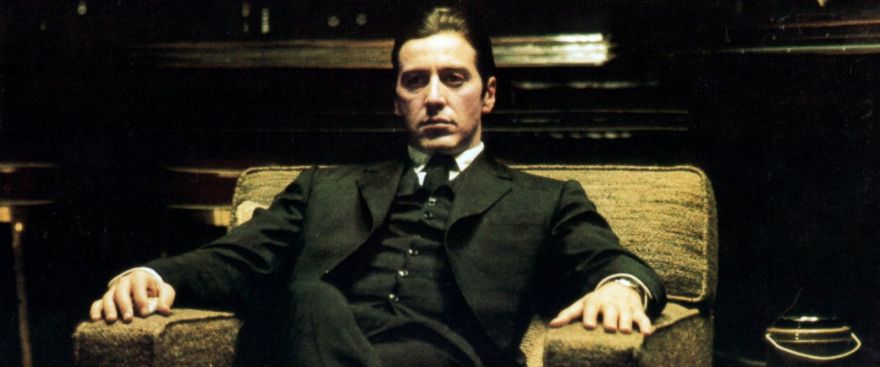
Thanks to our murderous creativity and later to Italian-American Francis Ford Coppola (and Italian-Americans Al Pacino and Robert De Niro), mafia has been the archetype of international organised crime since it was born in Sicily, with the unification of Italy, until today.

Al Pacino in The Godfather.

Let’s not even mention pasta and Neapolitan pizza and their global penetration into the stomachs of the world. French cuisine, you say? Quel shock! It comes from Italy as well. Although French food historians have been busy trying to debunk this fact, Catherine De’ Medici, sent to marry Henri II at the court of Francis I, imposed as a pre-condition bringing to Paris her eight chefs, who taught those half-baked potato-eaters what real food is. Anyway, Leonardo Da Vinci had already been to that court to freshen up the interior decoration. Just saying.

Politics and media

Flash forward to the 20th century. Who do you think Hitler was copying while setting up his racist, anti-semitic, bloody Third Reich? But our very own Benito Mussolini, of course. Fascism is back in vogue in the world. Who invented it? Some Italians imitating ancient Romans.

Quiz: who do you think came first, Marine Le Pen or the Lega Nord? And, hey, we’ve had an anti-European Union clown (I don’t mean that as an insult, that is Beppe Grillo’s lucrative profession) gathering 20% of the vote for the 5 Star Movement way before Brexit had its ill-tempered Nigel Farage. But Machiavelli is also one of our Made in Italy exports, after all.

Scroll down to the 21st century. Who’s had a dubious chauvinist billionaire with a loud mouth in power first? Italy or the US? Bunga-Bunga Berlusconi officially denied similarities with Donald Trump saying, “Hey, I’m not a conservative.” And he is technically right. But it is very difficult not to see the comparison.

Before Donald Trump, there was Italy's Bunga-Bunga Silvio Berlusconi. (Photo: Reuters)
Before Donald Trump, there was Italy’s Bunga-Bunga Silvio Berlusconi. (Photo: Reuters)

One advice I could give America and the world, having lived in Berlusconi’s Italy, is to not follow the pied piper, don’t let him entertain you, the message within the laughter is deadly and not in your interest.

Media should be careful and self-restrained. But, of course, it is impossible to resist. The system is set up so as to make the American Berlusconi impossible not to talk about.

And where did this system, capitalism, start anyway? Well, in the pioneering banking era of the De’ Medici family in Florence. Yes, in Italy.

But speaking of capitalism and media, there you have another proof of my theory: Italian media has always been embarrassingly biased. When I signed my contract with the newspaper la Repubblica decades ago, it spelled out that the editorial line was founded on the ideals of the democratic left. No secret there. In Italy, you read a newspaper, website or watch a specific TV channel only to reconfirm your opinions, not to get the facts. Facts are distorted by opinion anyway, so let’s just stick to your bias. Now that not only Fox, but also CNN, MSNBC, the Washington Post and the New York Times have largely given up on the idea of fairness in reporting, I deduce the Italianisation of media has reached globally. Communists read “il manifesto,” if you’re nostalgic for the good ol’ days of Benito, you read “Libero”.

Arnab Goswami, you say? We’ve had Giuliano Ferrara (a former Berlusconi minister at one point) since the 1980s in Italian TV. Ferrara built a political and media empire for himself out of being loud and overpowering guests with his own slant.

Okay, my theory is not that we’re the best influence, but that Italy is an influence nonetheless.

Yes, of course, I wish that everyone, as it is beginning to happen, just read our poet-philosopher Giacomo Leopardi, or rediscovered the aesthetic theories of Benedetto Croce, or read up on Antonio Gramsci or Pier Paolo Pasolini, and brought up the Venetian justice system or Venetian architect Palladio and painter Titian, when thinking of Italy. Or that people remembered our recently departed Umberto Eco, our immortal Italo Calvino along with the popular Elena Ferrante.

But this is what’s on the menu, in this Italian restaurant. The bad and the good. Written, of course, in a Times New Roman font.

Johanna Juni

My Neapolitan Novel Moment

img_0314

In Elena Ferrante’s second Neapolitan novel “The Story of a New Name,” Torregaveta makes an appearance when one of the characters tells her husband she wants to go to the beach with her small son, and her husband, who no longer loves her, tells her to take a bus to Torregaveta.

The bus ride starts from a Naples train station one stop removed from the main train station; the dead end last stop with rows of worn graffitied regional trains parked side by side almost in the dark. The seats in these regional trains are metal and miniature like cable car seats making them hood on the outside but dainty and refined on the inside. Once you leave Naples, the Naples-Torregaveta bus ride is almost entirely along the coast, like the Almalfi Coast route but less winding and less steep. This bus ride requires almost no attention from the bus driver, who frequently had his eyes off the road.

While I was stranded there for 20 minutes, I saw three different wedding groups having their photos taken and as the novel relates, it was not a Capri crowd. From a distance, I saw a little girl in a white dress constantly fluffing a bride’s gown. It was the best image I took in Naples, during my last few hours there. At the time, the only reference I had was to the book cover of the first novel, which I had not yet read, and so I had no idea the location would also signify something in the novel. What’s even more weird is that I had entertained the idea of being a mother with a child on this bus and wondered what it would be like.

The Irish Times

Romantic notions: does fiction warp our thinking about love?

The complexities of love and marriage have sustained novelists from Jane Austen to Elena Ferrante. What do they tell us?

Gwyneth Paltrow and Toni Collette in the 1996 film adaptation of  Emma by Jane Austen

According to Anthony Trollope, “There is no happiness in love, except at the end of an English novel.” The marriage plot is considered one of the oldest narrative structures in literary history, originating with the troubadour poets and extending to contemporary novels and modern popular culture.

A line from François de La Rochefoucauld: “People would never fall in love if they hadn’t ever heard love talked about,” forms the epigraph of Jeffrey Eugenides’s The Marriage Plot. Similarly, Alain de Botton quotes the same epigraph from de La Rochefoucauld in a New York Times article, using “that brilliant observer of human foibles” to strengthen his point: our style of loving is, to a significant extent, determined by what the prevailing environment dictates.

The complexities of marriage have provided ample fodder for novelists from Jane Austen to Karl Ove Knausgaard. Here are some of them. (…)

My Brilliant Friend by Elena Ferrante

Elena Ferrante is one of Italy’s best-known contemporary novelists, who remains an enigma as she refuses the glare of publicity, preferring her fiction to represent her. In the first of her four Neapolitan novels, the heroine Elena Greco writes of Nino (her soon-to-be husband) that “he said things that I could never have thought, or at least said, with the same assurance, and he said them in strong, engaging Italian.”

A reader of these novels will be able to study the changing landscape of the heroine’s marriage, the cooling of her ardour with time as she develops her own confidence and career. Ferrante explores the dilemma of marital crisis. “What could I do to keep my life and my children together?” asks Elena, a quandary faced by many women in the throes of a marital breakdown.

The News Today

The Elena Ferrante I recognised

I came upon Elena Ferrante’s Neapolitan novels quite late, when the translations of all four novels in the quartet had been published. I binge-read them. I drank them in like iced water on a hot day and, drinking too quickly, soon got a headache. Innumerable things big and small within the pages – incidents, images, single phrases – evoked that aching rush of feelings, a mix of “shaking my head” recognition, love and rage, which is how the best fiction works. Hadn’t one lived so much of this? The scruffy beloved dolls of childhood; the first experience of reading Little Women; the first time Lila writes a story. The fierce friendship of bold little girls in a world defined and controlled by men. As they grow up, their instinctive awareness of the need to strategise constantly, to camouflage their intelligence and reveal only flashes of it: “How difficult it was to find one’s way, how difficult it was not to violate any of the incredibly detailed male regulations.” On being a woman Ferrante’s epic saga contains everything about being a thinking, feeling, independent woman in the twentieth century: relationships, motherhood, the writing life, the life of work, sexual harassment, politics, sexism in the academy, the search for identity, choices. Disappointment, sometimes despair, but also compassion, solidarity and survival. Here, for instance, is the silent rage of the neighbourhood women: “As a child I imagined tiny, almost invisible animals that arrived in the neighbourhood at night, they came from the ponds, from the abandoned train cars beyond the embankment, from the stinking grasses called fetienti, from the frogs, the salamanders, the flies, the rocks, the dust, and entered the water and the food and the air, making our mothers, our grandmothers as angry as starving dogs.” And here is Lenu’s unforgettable description of Lila’s marriage: “The condition of wife had enclosed her in a sort of glass container, like a sailboat sailing with sails unfurled in an inaccessible place, without the sea.” Here is Lila’s resilience, her struggle to make and remake her identity even in the midst of brutal circumstances: designing shoes that other men will sell; designing a shop from which other men will profit; using black tape and paste to cut up her own photographic image in a brilliant act of disfigurement that symbolises not only her rage at being turned into an object, but also her unknowability, and the impossibility of reducing her to any one thing. And here is Lenu’s discipline, her intellectual growth, her struggle to escape the environment into which she had been born (“We had seen our fathers beat our mothers from childhood.”), to find her way through higher education, marriage, motherhood and writing, discovering her own narrative and herself as she retells the story of her friend’s wilful act of disappearance. In the novels, Lila and Lenu were both born in August 1944. I felt a small pang of emotion when I saw, in the index of The Story of a New Name, the mention of this detail. My mind took these fragments – a month, a year – and transported me to the Bombay neighbourhood of Matunga. My mother had been born in 1944. It was a time when India had not yet gained freedom from colonial rule. Growing up in that great commercial city, among immigrant families from the South, my mother was the first woman to graduate in her family. On the face of it, there is little to connect the lives of two fictional girls in a novel set in an impoverished, crime-ridden, deeply patriarchal neighbourhood in Naples with the life of my mother as I imagined her, a well-behaved little girl growing up in fifties’ India, in a comfortable middle-class family in Matunga, with braided hair, wearing a long pavadai, walking to the nearby South Indian Education Society school with her friends. Making connections But fiction makes unfathomable connections, and never in straight lines. I remember vividly an incident involving my mother and our neighbour’s child. We lived in Calcutta then, in a modern apartment building facing the lake. Our neighbours on the same floor were a family with two small children, a boy and a girl. Both fathers travelled constantly, leaving the mothers to raise the children. The women became close friends and the doors between the apartments remained open all day. One evening, our neighbours’ toddler cut her fingers while playing in their kitchen. As she screamed in pain, her mother was paralysed with fear. My mother ran in, with us behind her, saw what had happened, grabbed the child, called to my sister and me to come along, pushed all of us into the car – me, my sister, our neighbour, their little boy – and rushed us to the doctor. I asked my mother about that incident many years later. I had always known that she was capable and efficient, that she knew what to do in emergencies. People came to her for advice. But for a split second, before she whisked us into the car, my fear had been: what if she forgets to take us with her? My mother laughed: “How could I forget my children? I would sooner forget my eyes or my hands!” I thought of these words when I read about Lenu taking her little girls with her, one child holding her hand, a baby sleeping in a pram, as she attends demonstrations, lectures and events. Long descriptions of men arguing about politics, and suddenly the voices fade away as Lenu, urged by Lila (“Think what it means to have a small child”) goes to help a young woman manage a crying baby. A long family lunch in Naples with a local strongman shouting wildly, and in the midst of it all, Lenu shooting a reassuring glance at her little daughter, knowing Dede is frightened by the shouting. Has anyone written about motherhood in the way that Ferrante has? About how, even in the world of ideas and politics, one must always keep an eye on the children, for they must be dressed, fed, sent to school, and looked after. “Sooner forget my eyes or my hands.” Perhaps I am a bad reader. I knew Ferrante wrote under a pseudonym, but I never really obsessed over who she could be in ‘real’ life. The novels, which contain the “bare and throbbing heart” that Lenu describes, are more ‘real’ than any investigative report about royalty payments and real estate.

The Guardian

Best books of 2016 – part one

Blake Morrison

The Return; Frantumaglia: A Writer’s Journey; Solar Bones

Morrison

 The letters and interviews in Elena Ferrante’s Frantumaglia: A Writer’s Journey (trans Ann Goldstein, Europa), reveal all you ever need to know about the author of the Neapolitan Quartet, apart from the trifling matter of her identity.

James Meek

Everyone Is Watching; Memoirs of a Medieval Woman: The Life and Times of Margery Kempe

Meek

My cooking, cleaning and driving hours have been filled with Hillary Huber reading Elena Ferrante’s Naples quartet (trans Ann Goldstein, Europa/Blackstone). Not all writers adapt well to unabridged audiobookery; Ferrante, translated, does.

Scroll.in

Who would have thought Jhumpa Lahiri and Elena Ferrante had so much in common?

A scholar of the Italian language explores the ‘dissolving margins’ between Ferrante’s novels and Lahiri’s Italian work.

Who would have thought Jhumpa Lahiri and Elena Ferrante had so much in common?

In the six years that he spent in Mumbai as a teacher of the Italian language at Mumbai University, Roberto Bertilaccio acquainted himself with Hindi as well as bookstores around the city. But when he moved to Delhi in 2015, to concurrently teach Italian at Delhi University and Jamia Milia Islamia, Bertilaccio was surprised to find Italian novelist Elena Ferrante’s books in the bestseller sections of bookstores in the capital. His linguistic worlds were melding into each other as he watched the global appreciation for Ferrante, the Neapolitan quartet and the “exotic” appeal of Naples for the Anglophone world, as well as the buzz around Pulitzer-winning American novelist Jhumpa Lahiri writing in Italian.

That’s what got Bertilaccio to look into the works of both these acclaimed authors – who have a huge following in the Anglophone world – with a view to exploring common elements. To begin with, there is Ann Goldstein, the editor at the American magazine New Yorker, who has translated Ferrante’s books from Italian to English, as well as Lahiri’s Italian book In Altre Parole into the English In Other Words. Having immersed herself in the Italian language for much of the last decade, Lahiri moved to Rome, and has, at several literary fora, explained her reasons for not translating her own work in Italian into her prima lingua English.

However, Bertilaccio says he felt no uneasiness while reading In Altre Parole. “I was aware that the writer is not Italian and it isn’t her language. It is also not a novel and so the expectations were different. I did not feel any gap or distortion between whatever she is talking about and the style. I did not find her choice of word strange or unnatural or naive.”

‘Smarginatura’

Drawing on the critique of Ferrante by Tiziana De Rogatis, a professor at Università per Stranieri di Siena, Bertilaccio notes the common elements between Ferrante’s characters and Lahiri’s evolution with the Italian language as nothing short of “smarginatura”.

Ferrante has created new literary models of female identity, explains Bertilaccio. But while her characters are secure in themselves, even in their struggles, sometimes they are on the verge of crises, constantly struggling between choices.

“Smarginatura” – a word that Ferrante employs in her novels – cannot be easily translated into English. Goldstein has worded it as “dissolving margins” across Ferrante’s now-famous Neapolitan quartet. Said Bertilaccio, “Smarginatura is the experience of Lila, Ferrante’s character, right from the first book of the quartet My Brilliant Friend. Across all four books, Lila is in and out of margins. Compared to her friend Elena, she is the one who is constantly exposing herself (to situations) and is thus seen as less defensive.”

This exposing of oneself is extremely painful and yet vital for metamorphosis, and Lahiri, says Dr Bertilaccio, has expressed this kind of metamorphosis as important to her too, especially as she grasped the Italian language.

But Lahiri’s admiration of Ferrante, and of her own “smarginatura”, goes beyond mere fandom. Lahiri has previously spoken about how, having read Ferrante’s The Days of Abandonment in English, she felt the desperate need to read it in Italian, and she did so as she developed her own skill as a reader of the language. She said:

“It was one of those reading experiences that changed my life, pushed me over the edge as a reader of the Italian language. I decided to write two letters to Ferrante, because I felt this was the only way I could express what effect she had had on me as a reader. I wrote to her about her choice as an author to be present solely in terms of her writing, at least for our consumption and accessibility, and my admiration for this radical step to not participate in the publication of her books…”

Giving her a vision beyond the surface, “smarginatura” happens unwillingly to Lila. For Lahiri to put herself in the uncomfortable situation of not just learning but also writing in a new language is also about seeing beyond the surface, even it that might cost her her self image.

Bertilaccio feels that Ferrante has influenced Lahiri’s writing style in the Italian. In Altre Parole was born out of a collection of essays that Lahiri wrote during the one-and-a-half years she lived in Rome, and was invited to write for the politics and literary magazine Internazionale about her experiences in Italy and with the language. “The complete book as it is today is much more complex and is a mix of genre.” Said Bertilaccio. “On the one hand, it is like a journal as she follows her experience in a chronological way, while on the other hand, it is a coming-of-age book: a child (in language) becomes an adult, through different experiences, becomes more aware. The book is also a theory on literature and writing.”

He elaborated on this inspiration: “Apart from ‘smarginatura’, the idea of ‘sorveglianza’ or ‘watchfulness’ is typical of Lila, whereby the woman is acutely aware of whatever is happening to her and her children. The word can denote the act of policing, but in this context it is the psychological state typical of women. Lahiri’s writing has that kind of ‘sorveglianza’, about her own literary steps into Italian, with a continuous questioning of her own explorations, to reach some clarity, in each chapter.”

Play

‘Innesto’

Lahiri’s journey also mirrors the “innesto” as experienced by another Ferrante character Leda. In The Lost Daughter (not part of the quartet) Leda abandons her two daughters for three years to escape from her unhappiness over the failure of “innesto” or “graft” – bonding – with her children. “Lahiri says her approach to the Italian language was also ‘innesto’, a graft, because inserting grafts are risky,” said Bertilaccio. “For Lahiri, the possibly ‘wrong graft’ with its imperfections is the premise of her book. For her, the frustration and the imperfection of a new linguistic process puts her closer to a new way of creativity.”

In Altre Parole is divided into different chapters, each with a title that is a metaphor, which is about Lahiri’s process of learning the different linguistic and cultural nuances of the language during her journey. Lahiri, Bertilaccio asserts, chooses to write from such a context of displacement.

Ferrante is absconding from her real identity by creating a new one, but is also speaking openly about her childhood experiences, her vision of global politics, through her publisher. In her new collection of essays and interviews, titled Frantumaglia – another word that is difficult to translate and could be best understood as debris – she recounts her childhood, adolescence, and her life as a teacher. “Ferrante is thus described as a character: not just as an author whose story isn’t known, but one with an identity and a story of the past,” said Bertilaccio.

But Lahiri has been erasing her English literary background and starting from scratch as a writer in Italian, throwing herself into the mouth of a new language, by ignoring her own existence as an award-winning writer in English.

“Here in Italy where I am very comfortable, I feel more imperfect than ever…every day when i speak and write in Italian, I meet with imperfection…this reveals that I am not rooted in this language…Why, as an adult, as a writer, am I interested in this new imperfection? What does this offer to me? I would say, a stunning clarity, a more profound imperfection…Imperfection inspires invention, imagination, creativity…It stimulates…the more I feel imperfect, the more I feel alive. I have been writing since a child to forget my imperfections, in order to hide in the background of life. In a certain sense, writing is an extended homage to imperfection…I consider a book alive only during the writing. Afterwards, at least for me, it dies.”